日本の古材とは
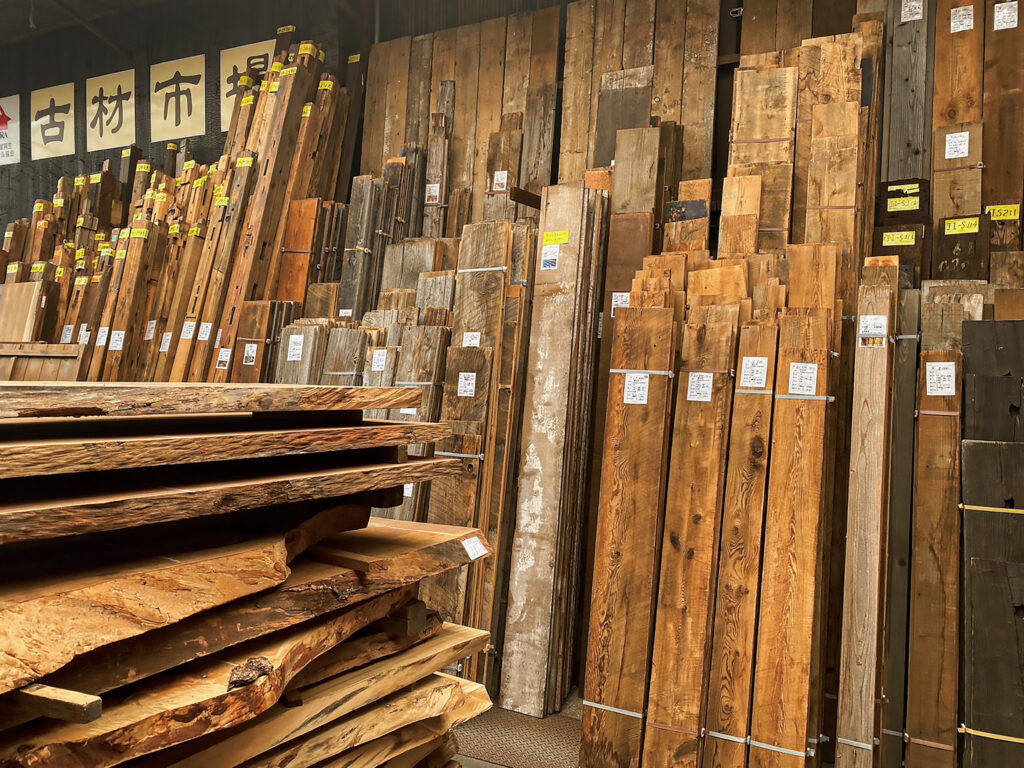
古材とは、古民家や町家、寺社仏閣などの歴史的建築物から取り外され、再び建築やインテリアに活用される木材のことを指します。多くの古材は80年から150年以上の年月を経ており、長い時間の中で自然に生まれた深い色合いや質感を持っています。
新しい木材と違い、古材には長年使われてきた歴史の痕跡が残っています。柱や梁の表面には、職人の手仕事による加工跡や自然な風合いが現れており、それが唯一無二の個性を生み出しています。こうした経年変化による美しさは、新しい木材では再現することができません。
近年、古材は単なる建築材料としてだけではなく、空間に歴史や物語を与えるデザイン素材としても注目されています。特にホテルやレストラン、カフェなどの商業空間では、古材が建築の象徴となる素材として採用されるケースが増えています。
What is Japanese Reclaimed Wood
Japanese reclaimed wood refers to timber salvaged from historic buildings such as traditional houses, machiya townhouses, temples, and shrines. These materials often date back 80 to more than 150 years and have developed a deep color, rich texture, and natural character over time.
Unlike newly processed wood, reclaimed timber carries visible traces of history. Marks from traditional tools, natural aging, and the original craftsmanship remain on the surface of beams and columns. These characteristics create a unique appearance that cannot be replicated with modern materials.
Today, reclaimed wood is valued not only as a construction material but also as an architectural design element. Its aged texture and historical authenticity add depth and character to contemporary spaces. For this reason, reclaimed wood is increasingly used in hospitality design, including luxury hotels, restaurants, and boutique commercial spaces.
日本の木造建築文化
日本は古くから木材を中心とした建築文化を発展させてきました。日本の伝統建築では、木材の特性を最大限に活かすために、釘を使わず木材同士を組み合わせる「仕口」や「継手」と呼ばれる高度な技術が用いられています。
寺院や神社、町家、古民家などの建築は、このような伝統的な木造技術によって支えられてきました。これらの建物は数百年にわたり使用されてきたものも多く、日本の木造建築の耐久性と美しさは世界的にも高く評価されています。
また、日本の建築文化では、木材を長く使い続けることが重要な価値とされてきました。建物が役目を終えた後も、木材は別の建築に再利用されることがあり、こうした文化が古材という素材を生み出しています。
The Culture of Japanese Wooden Architecture
Japan has developed a sophisticated architectural culture centered on wood. For centuries, Japanese buildings have been constructed using advanced carpentry techniques that connect wooden elements without nails. These methods, known as shiguchi and tsugite, allow wood to be assembled with precision while maintaining flexibility and durability.
Temples, shrines, traditional townhouses, and rural homes have been built using these techniques, allowing many structures to remain standing for hundreds of years. Japanese wooden architecture is admired worldwide for its structural elegance and craftsmanship.
Another important aspect of Japanese building culture is the idea that materials should continue to live beyond the lifespan of a building. When a traditional structure is dismantled, the timber is often carefully removed and reused. This tradition of reuse has naturally led to the creation of reclaimed wood as a valuable architectural material.
京都町家の木材
京都の町家は、日本の伝統的な都市住宅の代表的な建築様式です。細長い敷地に建てられた町家は、商家や職人の住居として長い歴史を持っています。
町家の構造には、太く力強い梁や柱などの上質な木材が使われています。これらの木材は、当時の大工職人の技術によって丁寧に加工され、建物の骨組みとして長い年月を支えてきました。
町家に使われていた木材は、年月を重ねることで深い色艶や独特の質感を持つようになります。町家が解体される際には、これらの木材を丁寧に取り外し、古材として新しい建築やインテリアに再利用することができます。
京都の町家から生まれる古材は、日本の歴史と建築文化を象徴する素材として、国内外の建築家やデザイナーから高く評価されています。
Timber from Kyoto Machiya
Kyoto machiya are traditional urban townhouses that represent an important part of Japan’s architectural heritage. Built on narrow plots of land, machiya served as both homes and workplaces for merchants and artisans in Kyoto.
The structural framework of machiya includes large beams and columns made from carefully selected timber. These materials supported the building for decades, sometimes more than a century, while gradually developing a beautiful natural patina.
When machiya buildings are dismantled, these historic timbers can be salvaged and reused as reclaimed materials. The wood carries the spirit of Kyoto’s architectural history and the craftsmanship of traditional carpenters.
Today, timber from Kyoto machiya is highly valued by architects and designers who seek materials that express authenticity, history, and cultural depth.
古材梁の特徴
古材梁の最大の魅力は、長い年月の中で生まれた自然な風合いと存在感にあります。梁の表面には、鉈や手斧などの道具による加工跡が残っていることが多く、当時の職人の手仕事を感じることができます。
また、自然な曲がりや力強い木目、深い色合いなど、古材梁には一本ごとに異なる個性があります。同じ形や表情のものが存在しないため、建築空間の中で特別な存在感を生み出します。
ホテルやレストラン、カフェなどのデザイン性の高い空間では、古材梁が天井のアクセントや空間の象徴として使われることが多く、空間全体の印象を決定づける重要な要素となります。
Characteristics of Reclaimed Beams
One of the most striking features of reclaimed beams is their powerful visual presence. Over decades of use, the wood develops a deep color and texture that cannot be reproduced with new materials.
Many reclaimed beams also show marks from traditional hand tools such as adzes and axes. These marks reflect the craftsmanship of the original builders and add a unique character to the timber.
Natural curves, strong grain patterns, and irregular forms make each beam completely unique. No two reclaimed beams are the same, which makes them particularly attractive for architectural design.
In modern interiors such as hotels, restaurants, and cafes, reclaimed beams are often used as a central design element. They bring warmth, authenticity, and a strong architectural identity to the space.
建築家が古材を選ぶ理由
近年、多くの建築家やインテリアデザイナーが古材をデザイン素材として採用しています。その理由の一つは、新しい木材では表現できない独特の質感と歴史的な魅力にあります。
長い年月を経て生まれた古材の色合いや表情は、空間に深みと温かみを与えます。また、古材には過去の建築や職人の技術が刻まれており、建築にストーリー性を持たせることができます。
特にホテルやレストランなどの空間では、訪れる人に印象的な体験を提供することが重要です。古材を使うことで、空間に特別な雰囲気や個性を生み出すことができるため、多くの建築家に選ばれています。
Why Architects Use Reclaimed Wood
Architects and interior designers increasingly choose reclaimed wood because it provides a depth of character that modern materials cannot offer.
The natural aging process creates subtle tones and textures that add warmth and visual interest to a space. Reclaimed timber also carries a narrative element, connecting contemporary architecture with traditional craftsmanship and historical materials.
In hospitality design, creating a memorable environment is essential. Reclaimed wood helps establish a distinctive atmosphere that resonates with visitors. Its authenticity and uniqueness make it particularly appealing for luxury hotels, restaurants, and cultural spaces.
For many designers, reclaimed wood represents the combination of material beauty, history, and sustainable design.
サステナビリティと古材
古材の再利用は、持続可能な建築を実現するための重要な取り組みの一つです。既存の建物から取り出された木材を再び利用することで、新しい森林資源の消費を抑えることができます。
また、古材の利用は建築廃材の削減にもつながり、環境負荷を低減する効果があります。長い年月を経て自然乾燥した木材は、安定した建築材料としても高い価値を持っています。
このように古材は、環境への配慮と伝統文化の継承を同時に実現するサステナブルな建築素材として、世界的にも注目されています。
Sustainability and Reclaimed Wood
The reuse of reclaimed wood plays an important role in sustainable architecture. By salvaging timber from existing buildings and reusing it in new projects, the demand for newly harvested wood can be reduced.
This approach helps conserve forest resources while also minimizing construction waste. Reclaimed wood therefore contributes to a circular use of materials in the built environment.
Another advantage is that reclaimed timber has often undergone decades of natural drying. This long-term aging process can increase stability and make the wood well suited for architectural applications.
As sustainable design becomes increasingly important worldwide, reclaimed wood is gaining recognition as an environmentally responsible building material.
世界で注目される日本の古材
近年、日本の古材は海外の建築家やデザイナーからも高い評価を受けています。特に京都の町家から生まれる古材は、日本文化を象徴する素材として注目されています。
日本の古材は、自然素材ならではの温かみや手仕事の痕跡が残る点が特徴で、海外の建築素材にはない魅力を持っています。そのため、高級ホテルやレストラン、住宅などのデザインに採用されるケースが増えています。
日本の古材は、単なる建築材料ではなく、日本の歴史や文化を伝える素材として世界の建築市場で価値を高めています。
Global Interest in Japanese Reclaimed Wood
In recent years, Japanese reclaimed wood has attracted growing interest from architects and designers around the world. Timber from historic Kyoto machiya is particularly admired for its cultural significance and distinctive aesthetic qualities.
The visible traces of hand craftsmanship and the aged texture of the wood offer a sense of authenticity that is difficult to find in modern materials. As a result, reclaimed Japanese timber is increasingly used in luxury hotels, restaurants, residential architecture, and boutique retail spaces.
For international designers seeking materials that combine tradition, natural beauty, and unique character, Japanese reclaimed wood represents an extraordinary resource.
京都古材市場について
京都古材市場は、京都で160年以上続く木材商である株式会社丸嘉が運営する古材専門事業です。
京都の町家や古民家から採取された古材梁や柱、古建具など、日本最大級の在庫を保有しています。これらの歴史ある素材を保存し、ホテル、レストラン、商業施設などの空間デザインに提案しています。
京都古材市場は、日本の木の文化と伝統建築資材の魅力を国内外の建築家やデザイナーに紹介し、日本の古材文化を未来の建築へとつなげていくことを目指しています。
About Kyoto Kozai Ichiba
Kyoto Kozai Ichiba is a reclaimed wood specialty division operated by Maruyoshi Co., Ltd., a timber company with more than 160 years of history in Kyoto.
We preserve and supply historic architectural materials salvaged from Kyoto machiya and traditional Japanese buildings. Our inventory includes reclaimed beams, columns, antique wooden fixtures, and other architectural elements.
With one of the largest reclaimed wood inventories in Japan, we provide materials for architectural and interior design projects such as hotels, restaurants, commercial spaces, and cultural facilities.
Kyoto Kozai Ichiba aims to share the beauty and value of traditional Japanese timber culture with architects and designers around the world, connecting historic materials with the architecture of the future.